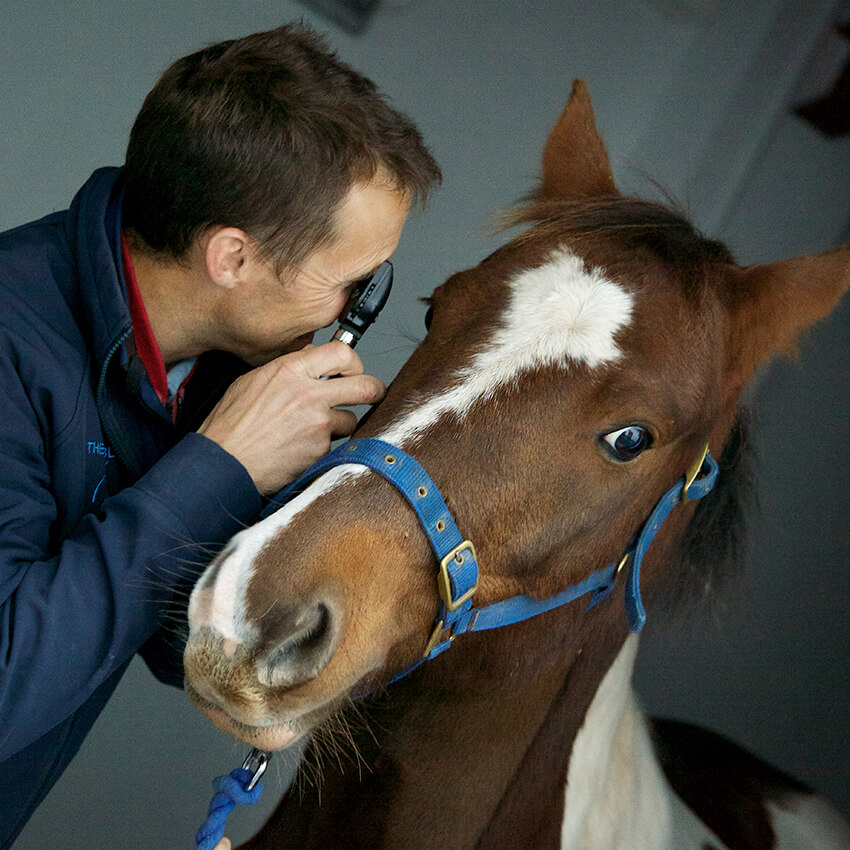
Trigeminal-mediated headshaking is a debilitating neuropathic facial pain condition in horses, caused by abnormal sensitisation of the trigeminal nerve. Affected horses show repeated vertical head movements and signs of nasal irritation, often becoming distressed, unsafe to ride or handle, and in severe cases may be euthanased. Despite its serious welfare implications, little is known about the underlying mechanisms of the condition and there is currently no single safe, effective treatment for all horses.
With support from the Langford Trust, researchers at Bristol Veterinary School have led major advances in managing this condition, including pioneering the use of percutaneous electrical nerve stimulation (PENS). Studies involving horses across the UK and Europe showed that around half of treated horses were able to return to ridden work, although treatment access, cost and variable duration of benefit remain challenges.
Our latest project builds on that progress by investigating transcutaneous pulsed radiofrequency (TcPRF), a non-invasive and more accessible pain-management approach used in human medicine. The Trust’s funding supports a pilot study to assess the effectiveness of a single TcPRF treatment in horses with trigeminal-mediated headshaking. To ensure robust, objective outcomes, the study will use and further develop accelerometer technology—previously validated with Trust support—to measure headshaking accurately over extended periods, reducing reliance on subjective owner reporting and strengthening the evidence base for future treatment options.
The team behind the science
Dr Veronica Roberts, Senior Lecturer in Equine Medicine, University of Bristol Veterinary School
Dr Nik Patel, Neurosurgeon, North Bristol Nhs Trust
Professor Jane Williams, Head of Equine Research, Hartpury University
Dr Kirstie Pickles, Teaching Fellow, Harper-keele Vet School
Dr David Marlin, Animalweb
What the project entails
This project aims to assess the safety, tolerance and clinical practicality of TcPRF in horses with trigeminal-mediated headshaking, while objectively evaluating treatment response using accelerometer-based monitoring.
By comparing continuous, quantitative measures of headshaking with subjective owner assessments, the study will determine whether TcPRF shows sufficient promise to justify further clinical investigation and whether objective monitoring provides a more reliable method for assessing disease severity and treatment efficacy.
Why this project matters
Current assessment of trigeminal-mediated headshaking relies heavily on subjective observation, which is unreliable due to fluctuating symptoms and a well-documented placebo effect, increasing the risk of prolonged pain from ineffective treatments.
This project addresses two major barriers to progress: the lack of validated objective outcome measures and the limited availability of accessible, evidence-based therapies. By generating robust data to inform clinical decision-making, the study will guide future trials, support responsible investment, and has the potential to deliver scalable welfare benefits by improving access to effective, non-invasive treatment options for affected horses.